
At A Glance
Planning your stay?
Luxury Villa Stays at Villa Almada — check availability and book direct.
Estádio do Dragão is FC Porto’s 50,033-seat home ground in the east of the city, reachable on four metro lines from central Porto in about fifteen minutes.
- Opened on 16 November 2003 at a cost of €125 million, replacing Estádio das Antas.
- Metro lines A, B, E and F all stop at a station sitting at the stadium entrance.
- A Z2 Andante title costs €1.40 each way, with the reusable card another €0.60.
- Match tickets come from FC Porto direct, priced fixture by fixture rather than per season.
- On non-match days the museum and pitchside tour run daily and take about 90 minutes, from €25.
- Villa Almada is a 15-minute walk from the old town and four metro stops from the turnstiles.
Insider tip from Villa Almada
Load your Andante card the day before the game, not on the day. The machines at Trindade get a long queue about 90 minutes before kick-off, and it is the one thing that turns a relaxed 15-minute ride into a scramble. Guests who sort it the night before walk straight down to the platform.
Porto is a walking city for almost everything, and then there is the football, which sits four metro stops east of the centre and works to its own set of rules. The ground is easy to reach once you know which line to take, and if you are still working out the network, our Porto Metro map guide covers the colours, the zones and where each line actually goes.
We have had a lot of guests at Villa Almada come to Porto specifically for a game, and the questions are always the same ones. Where do I buy a ticket that is genuinely from the club. How long does it take to get out there. Is the stadium worth visiting if there is no match on while we are here. Can I take a nine-year-old. This is the answer to all of those, written from what our guests have actually needed rather than from a press pack.
The ground that replaced Estádio das Antas
FC Porto spent seventy years at Estádio das Antas before moving out. Portugal winning the right to host Euro 2004 was the push that finally paid for a replacement, and construction started in late 2001 on a site a short distance from the old ground. Manuel Salgado designed it, Somague built it, and the final bill came to €125 million, of which the Portuguese state contributed €18.1 million.
The opening night, 16 November 2003, is still the best story the building has. Porto beat Barcelona 2-0 in front of 52,004 people, which remains the record attendance here and is a couple of thousand higher than the seated capacity the ground settled at afterwards. A sixteen-year-old Lionel Messi came off the bench for Barcelona that evening and made his first appearance in a Barcelona shirt. Very few people in the stands knew what they were watching.
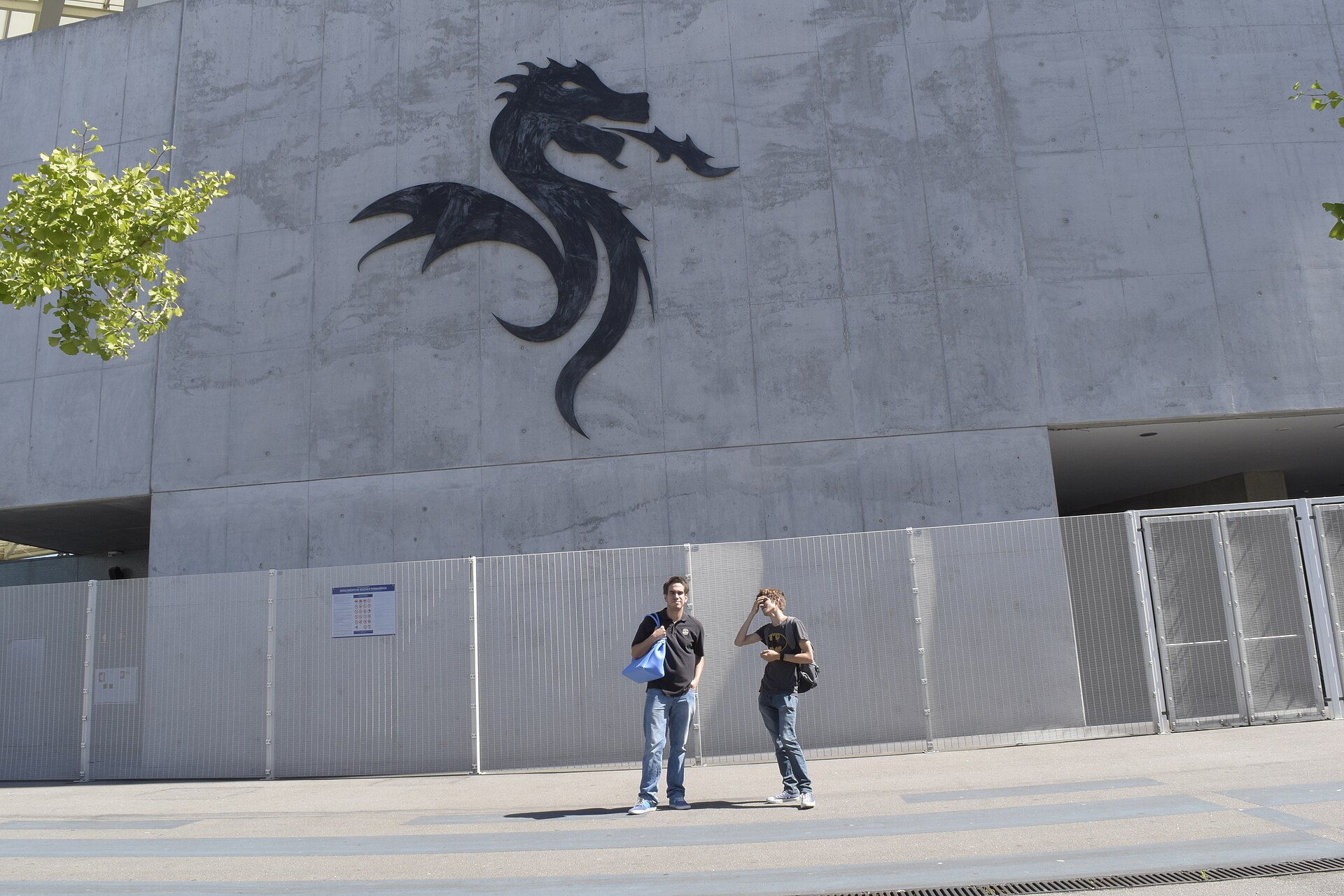
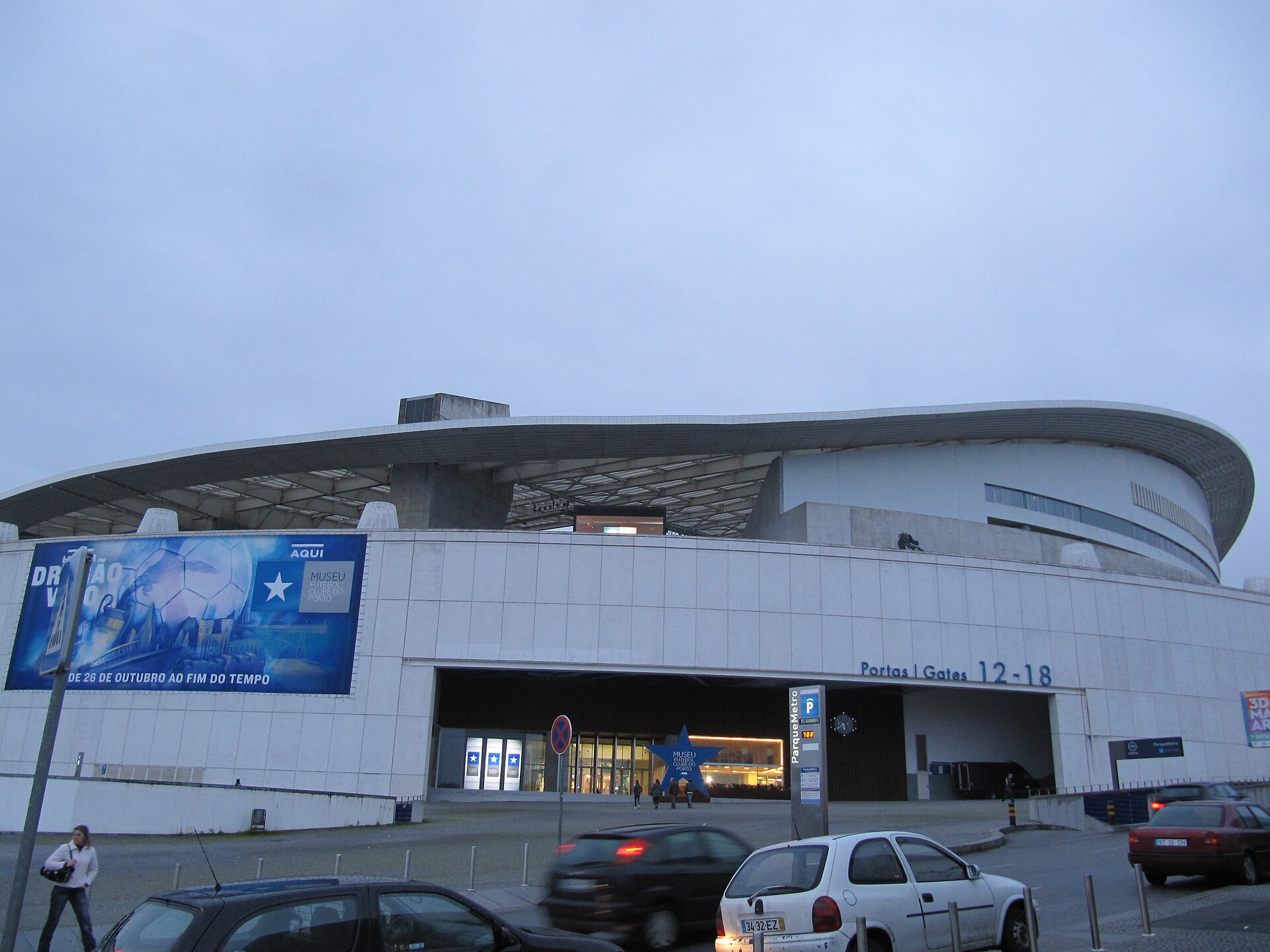
What you notice on arrival is how little the building tries to look like a stadium from the outside. It is a long curved wall of raw concrete and white panelling with the dragon cut into it, and the roof folds over the top in one continuous sweep. The frame carries around 21,000 square metres of azulejo tiling, which is a very Porto way of finishing a modern building. UEFA rates it a Category Four ground with four-star elite status, which is why it keeps getting handed the big one-off fixtures.
| Detail | Figure |
|---|---|
| Seated capacity | 50,033 |
| Opened | 16 November 2003 |
| Construction cost | €125 million |
| Architect | Manuel Salgado |
| Record attendance | 52,004 (Porto 2-0 Barcelona, 16 November 2003) |
| Pitch dimensions | 105 m x 68 m |
| Executive suites | 96 |
| UEFA rating | Category Four, four-star elite |
| Address | Via Futebol Clube do Porto, 4350-415 Porto |
Six Euro 2004 matches were played here including the opening game and a semi-final. The 2019 UEFA Nations League finals came next. Then in 2021 the Champions League final was moved out of Istanbul at short notice and landed in Porto, where Chelsea beat Manchester City 1-0. The Rolling Stones, Coldplay, Muse and One Direction have all played the bowl as well, so if your dates fall on a concert week the football calendar shifts around it.
Getting to the ground from the middle of Porto
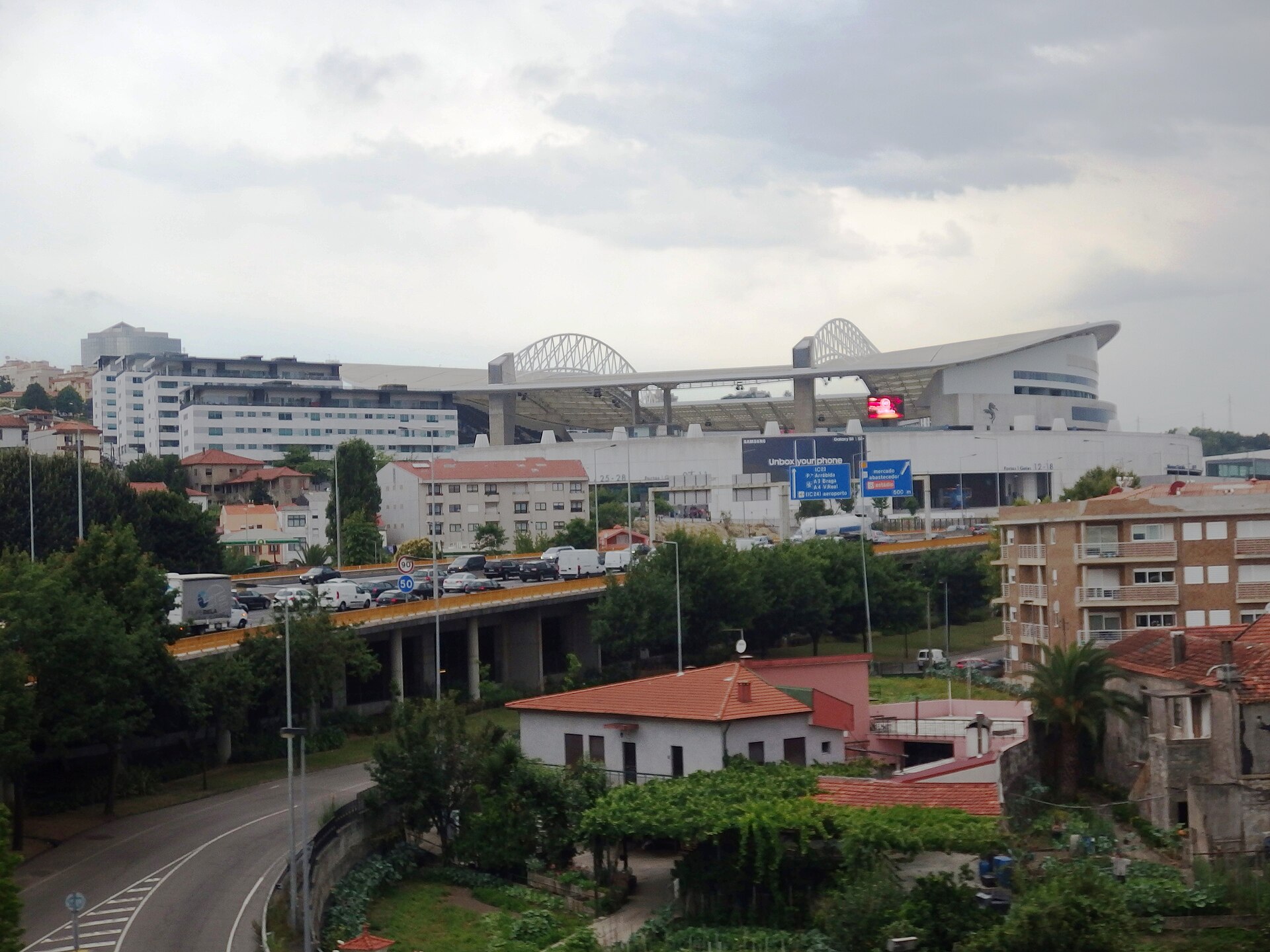
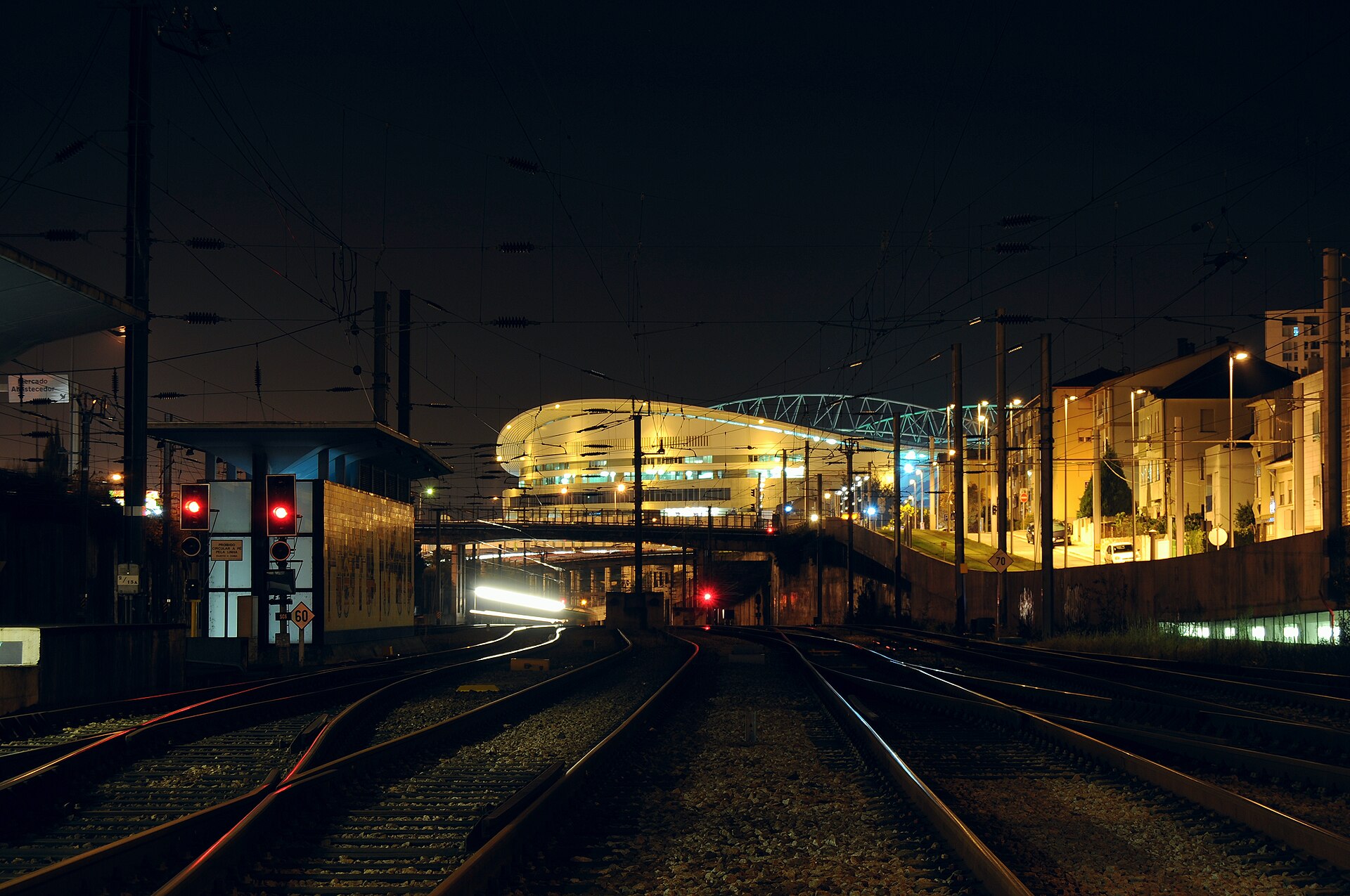
The metro is the answer, and it is not close. Four lines run to Estádio do Dragão station: A, B, E and F. The station sits at the stadium entrance rather than a walk away from it, which on a wet November evening matters more than you would think. From Trindade, the four-line interchange in the middle of town and the closest hub to us, you are looking at a ride of roughly a quarter of an hour.
Fares work on the zonal Andante system. Central Porto and the stadium sit close enough together that the journey is covered by the cheapest Z2 title, which is €1.40 each way on a reusable Andante card. The card itself costs €0.60 and you buy it once. If you are moving around the city all day anyway, the 24-hour Z2 ticket at €5.15 pays for itself in four journeys. Our full Andante card guide covers top-ups, validation and the zone map in more detail.
| Andante ticket | Z2 | Z3 | Z4 |
|---|---|---|---|
| Single journey | €1.40 | €1.80 | €2.25 |
| Book of 10 + 1 | €14.00 | €18.00 | €22.50 |
| 24-hour ticket | €5.15 | €6.65 | €8.30 |
| Reusable Andante card | €0.60, bought once and topped up | ||
Buses 401, 703 and 806 also serve the stadium if the metro is disrupted. A taxi or an Uber from the historic centre runs to somewhere between €6 and €10 depending on traffic, which is fine on the way out and considerably less fine on the way back, when fifty thousand people want the same thing at the same moment. Driving yourself and parking on a match day is the one option I would talk you out of.
Have this ready before you leave
- A topped-up Andante card for everyone in the party, sorted the night before
- Photo ID, because tickets are issued in a named person’s name
- The gate number from your ticket, which is printed on it and is not the same as your block
- A layer more than you think you need for an evening kick-off, the bowl catches the wind
- A plan for getting back that does not rely on flagging a taxi outside the ground
Buying tickets for a home fixture
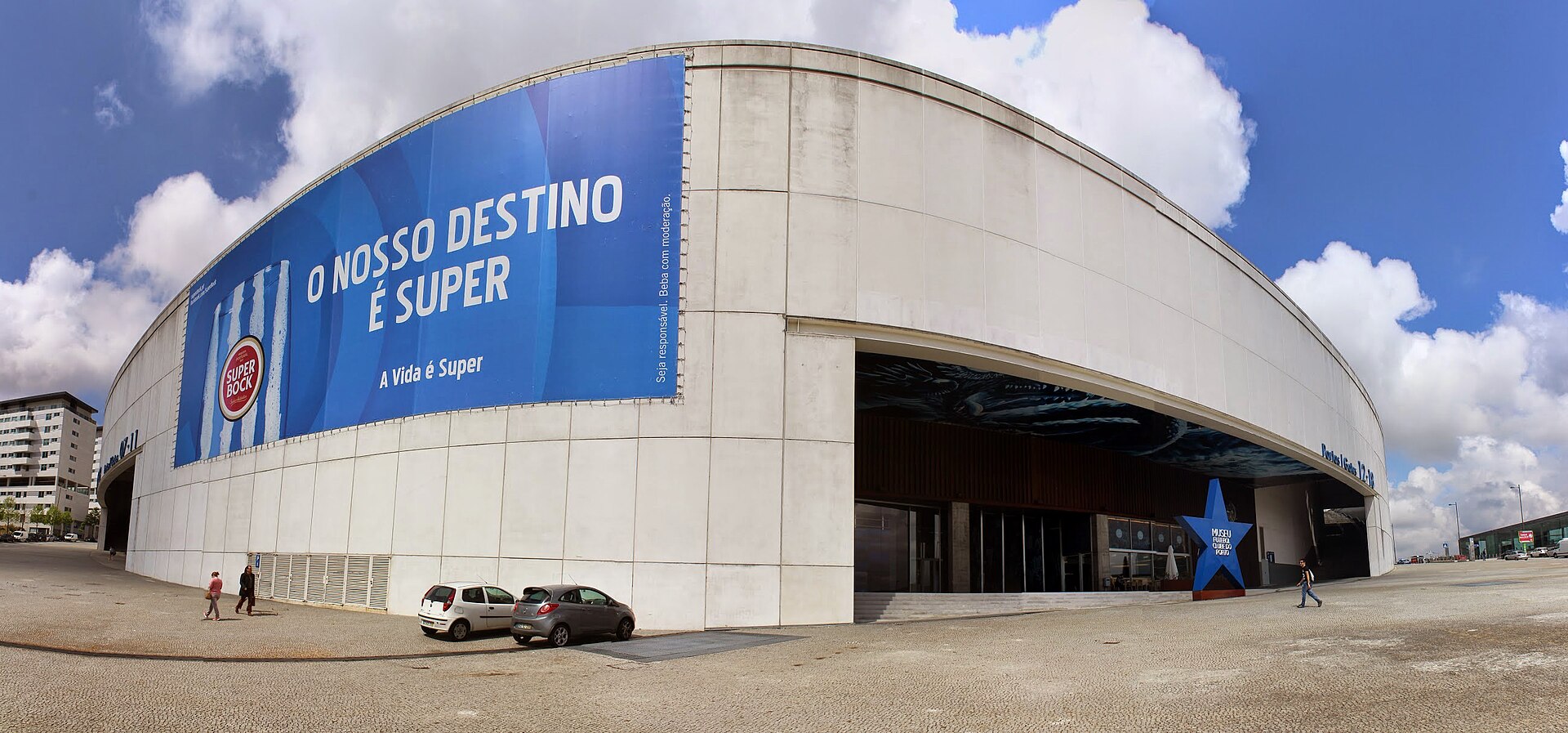
Buy from the club. FC Porto sells its own tickets through the official site and through the ticket office at the ground, and that is the only route I would send a guest down. The resale sites that rank well in English search results charge a large markup and cannot always deliver a valid named ticket, which is a bad thing to discover at a turnstile on a Saturday night in a language you do not speak.
Prices are set fixture by fixture rather than being fixed for the season, so the number you see quoted on a travel blog from two years ago is not what you will pay. A midweek league game against a mid-table side and a Champions League night against a European name are completely different propositions, both in price and in how quickly they go. The club publishes each fixture’s prices when that fixture goes on sale, which is the only place worth checking.
Sale dates are tied to the fixture, not to the season, and they typically open a few weeks ahead. The two derbies against Benfica and Sporting CP and the European nights are the ones that disappear, and if your trip is built around one of those, set a reminder rather than assuming you will pick something up when you land. Everything else is usually available closer in, and the ticket office at the ground is a perfectly reasonable place to buy for an ordinary league game.
One thing that catches people out: Portuguese league kick-off times move for television, sometimes only a few weeks before the game. Book the flexible parts of your trip around the fixture rather than the other way round, and check the confirmed time again in the week of the match.
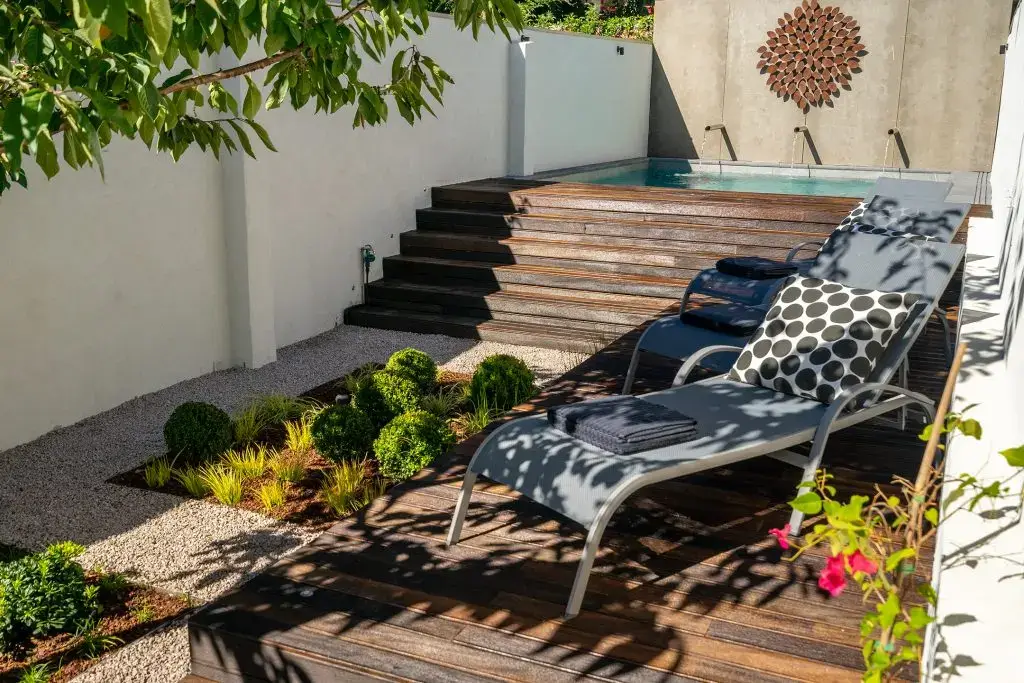
Coming over for a fixture? Villa Almada sleeps six plus two infants, with a private heated pool and a 15-minute walk into the old town.
Check availabilityThe FC Porto Museum and the pitchside tour

If there is no home game while you are here, the museum and the tour are the reason to come out anyway, and honestly they hold up better than most club museums I have been dragged around. The museum is open daily from 10:00 to 19:00 and closes only on 25 December and 1 January. Stadium tours run between 11:00 and 17:00 with departures on the hour, and the combined visit takes about an hour and a half.
General admission starts at €25 and it is worth booking ahead in summer and at weekends, when the hourly tour slots fill. The tour takes you down through the tunnel and out pitchside, which is the bit children remember, and through the dressing rooms and the press area. The museum itself leans harder on the club’s European history than you might expect, and the trophy hall is genuinely striking rather than a corridor of cabinets.
Book directly through the club at fcporto.pt, where the current opening pattern and prices are published. Tours do not run in the hours around a home fixture, so if your only free afternoon is a match day, check before you make the trip out. This is the single most common wasted journey our guests report.
Five things to sort before kick-off
1. Buy through an official channel and nowhere else
The club site and the stadium ticket office are the two routes that reliably produce a ticket that works. Everything else is resale, and resale in Portuguese football means a named ticket that may not match the name of the person trying to use it. Turnstile staff do check on the bigger games.
If a fixture has genuinely sold out through official channels, the honest answer is to pick a different game rather than pay four times face value for something that might not scan. Porto play a lot of home fixtures across the league and Europe, and most of them are available.
2. Get the Andante card loaded the day before
A Z2 single is €1.40 and the card is €0.60, so the whole thing costs under €4 return for one person. The cost is not the issue. The issue is that the ticket machines at the central stations develop a serious queue in the hour and a half before a big kick-off, and that queue is entirely avoidable.
Buy the card and load a return, or take the 24-hour ticket at €5.15 if you are out in the city all day anyway. Then validate on the yellow reader before you step onto the platform, every single journey, including the one home.
3. Confirm the kick-off time in match week
Portuguese league times are set by the broadcasters and are moved regularly, occasionally by a couple of hours and occasionally to a different day. A time you noted when you booked flights in March is not a time to build a Saturday around in October.
Check the club fixture list again in the week of the game, and if you have a dinner reservation or a Douro trip on the same day, hold the flexible one loosely. This catches out visiting fans far more often than any of the ticketing problems.
4. Take photo ID and the card you paid with
Tickets are issued to a named individual. Bring a passport or a national ID card for each person in the party, and the payment card used for the booking, which is occasionally asked for at collection. Photographs of documents on a phone are not always accepted.
If you are collecting rather than printing at home, allow an extra half hour and go to the ticket office rather than the turnstile. It is a short walk around the outside of the bowl and it is signed, but it is not where you would instinctively head.
5. Decide how you are getting back before you go
The metro absorbs the crowd surprisingly well, but the first fifteen minutes after the final whistle are the worst of it, and the ride-hailing surge outside the ground after a night game is punishing. Waiting twenty minutes for the platform to clear costs nothing and makes the journey back much more civilised.
Check the last train on the Andante app before you set out, particularly for a late European kick-off. If you would rather eat properly than queue for the platform, our guide to where to eat and drink in Porto has the places that serve late.
Taking children to a game at the Dragão
We get asked this constantly and the answer is yes, with one decision to make well. Behind the goals is where the organised support stands, sings for ninety minutes and sets off the flares, and it is a fabulous thing to watch from a distance and quite a lot for an eight-year-old to be inside. The side stands give you the same atmosphere at a volume everybody can enjoy, and a better view of the actual football.
An evening kick-off with young children is the other thing to weigh. A 20:30 start means a 22:30 finish and getting back into the city closer to 23:30 once the crowd has cleared, which is a big ask on the second night of a holiday. A Sunday afternoon league fixture is a much easier introduction and the ground is no less impressive in daylight.
If the fixture list does not cooperate, the museum and pitchside tour does most of the same job for a fraction of the effort. Walking out of the tunnel onto the edge of the pitch is the photograph the children actually want. There is more in this vein in our guide to things to do in Porto with kids.
Where to base yourself for a Porto football weekend
The temptation is to book something near the stadium. I would not. The area around the ground is functional rather than somewhere you want to spend a Saturday morning, and you are on the metro anyway, so being four stops from the turnstiles gains you very little and costs you the entire rest of the city. Stay central, use the metro for the football, and walk to everything else.
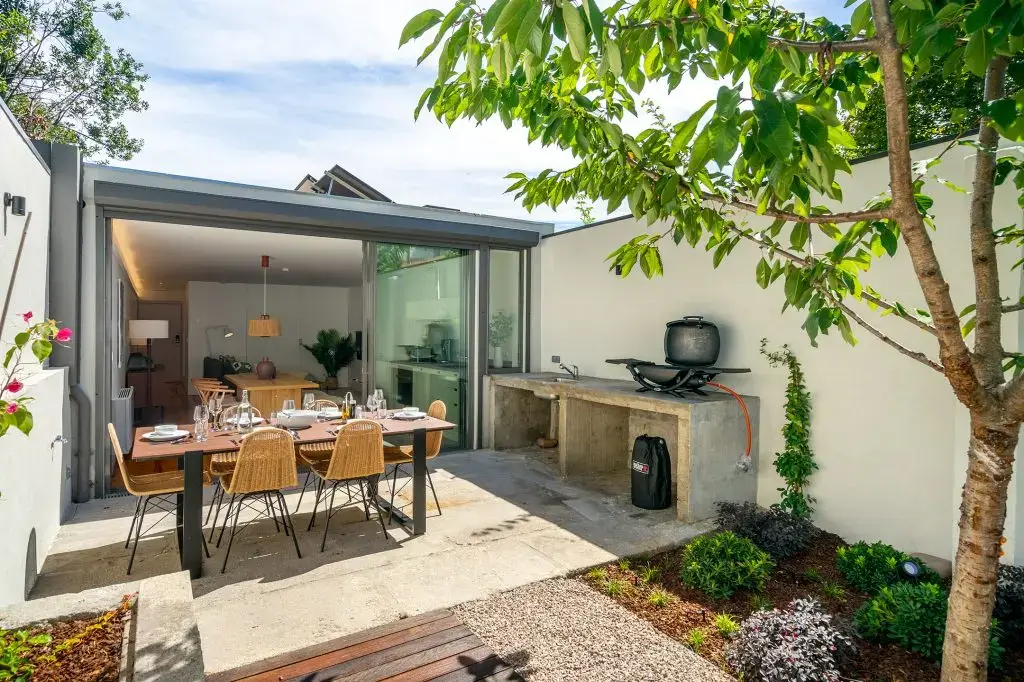
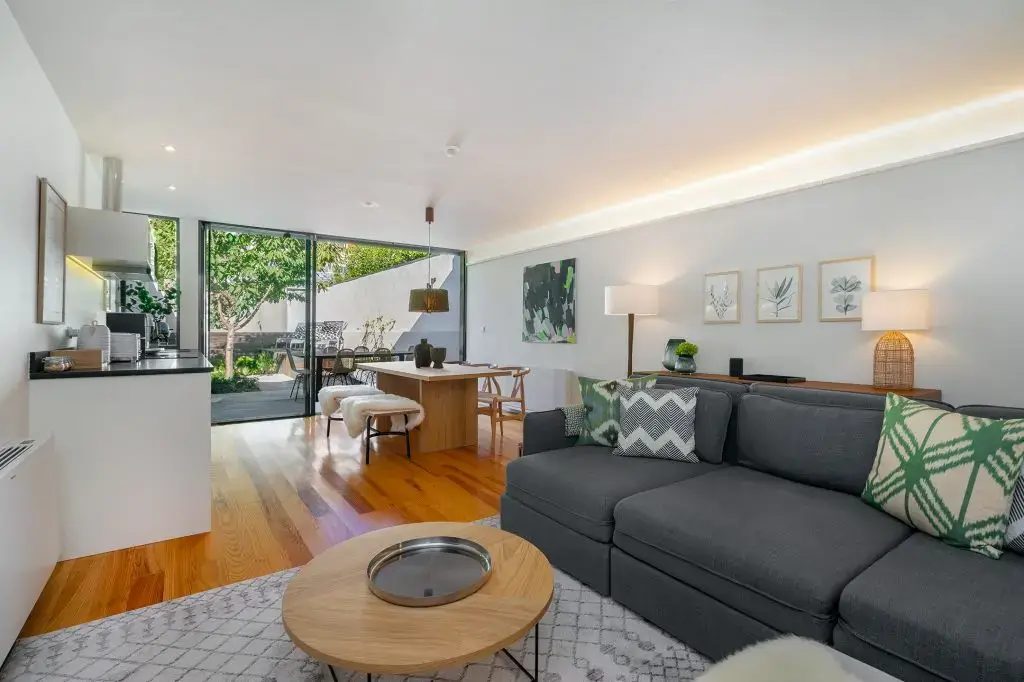
Villa Almada sits in the garden of our Canto de Luz Boutique Maison, right in the heart of Porto and a stone’s throw from Rua do Almada. It sleeps six plus two infants across two suites with super king beds that can be split into singles, both ensuite, which works neatly for two couples or a family. There is a private heated pool, a private garden and terrace, a full open-plan kitchen, and breakfast is made fresh every morning and served either at the villa or over in La Cuisine in the Maison.
For a football weekend the practical part is that you get a proper house rather than four hotel rooms. Everyone lands at different times, someone wants a swim before the game, someone else wants to watch the earlier kick-off on the smart TV, and you eat together afterwards without booking a table for six at 23:00. Daily cleaning happens regardless. A far cry from the soulless chain hotels of yesterday.
Photos of Villa Almada
Two super king suites, a private heated pool and a garden of your own, right in the heart of Porto.


From €269/night. FTC disclosure: links to our own villa booking page.

A note from Susan
“The first time I went to the Dragão I made every mistake on this list. I bought late, I queued for an Andante card with ten minutes to spare, and I walked to entirely the wrong gate in the rain. It was still one of the best evenings I have had in this city. Give yourself an extra hour, take the metro, and let the crowd carry you along.”
Susan, founder, Espais Roca
More to explore in Porto
- Porto Metro map: lines, stations, zones and fares explained
- Andante card Porto: prices, zones and how to buy it
- Best places to eat and drink in Porto
- Family-friendly things to do in Porto with kids
- Porto villa with a private pool: stay at Villa Almada
 Google review
“Awesome lodging in the heart of Porto. The service is 6 stars if possible. While all the staff were outstanding, Susan and Hannah were incredibly kind and helpful during our stay. I would not stay anywhere else when returning to Porto.”
DM B · Couple holiday · 5/5
Frequently Asked Questions
Where Is Estádio do Dragão and How Do You Get There?
The ground is at Via Futebol Clube do Porto, 4350-415 Porto, in the east of the city. Metro lines A, B, E and F all run to Estádio do Dragão station, which sits at the stadium entrance, and the ride from Trindade in the centre takes around fifteen minutes. Buses 401, 703 and 806 also stop nearby, and a taxi from the historic centre costs roughly €6 to €10.
How Do You Buy FC Porto Tickets?
Buy directly from FC Porto through the official club website or at the ticket office at the stadium. Tickets are issued in a named person’s name, so take photo ID for everyone in your party and the payment card used for the booking. Third-party resale sites charge a large markup and cannot always deliver a ticket that scans at the turnstile.
When Do FC Porto Tickets Go On Sale?
Sale dates are set per fixture rather than for the whole season, and usually open a few weeks before the match. The two derbies against Benfica and Sporting CP, plus European nights, sell out fastest and are worth setting a reminder for. Ordinary league fixtures are generally still available closer to the date, including at the stadium ticket office.
What Is the Capacity of Estádio do Dragão?
The seated capacity is 50,033. The record attendance is higher, at 52,004, set at the opening match against Barcelona on 16 November 2003 before the ground settled into its current all-seated configuration. The pitch measures 105 metres by 68 metres and there are 96 executive suites around the bowl.
Can You Tour Estádio do Dragão Without a Match Ticket?
Yes. The FC Porto Museum opens daily from 10:00 to 19:00 and stadium tours run from 11:00 to 17:00 with departures on the hour. The combined museum and tour visit takes about an hour and a half and general admission starts at €25. Tours do not run in the hours around a home fixture, and the museum closes on 25 December and 1 January.
What Is FC Porto’s Stadium Called and Why?
It is called Estádio do Dragão, which translates as Stadium of the Dragon. The dragon comes from the club crest and is cut into the raw concrete of the outer wall, where it is the first thing you see walking up from the metro. The ground replaced Estádio das Antas, FC Porto’s home for around seventy years.
Where Is the Away Section at Estádio do Dragão?
Visiting supporters are allocated a segregated block in the upper tier, and the exact location is confirmed by the club for each fixture rather than being fixed. Your gate number is printed on the ticket and is not the same as your block number, so follow the gate signage around the outside of the bowl. Allow an extra half hour for the search at bigger fixtures.
How Much Are FC Porto Tickets?
Prices are set fixture by fixture rather than fixed for the season, so a midweek league game and a Champions League night cost very different amounts. FC Porto publishes each fixture’s pricing when that game goes on sale, and that is the only reliable place to check. For comparison, the museum and stadium tour is a fixed product starting at €25.
Stay with us in Porto
Villa Almada, luxury family villa with a private pool
Set in the garden of our Canto de Luz Boutique Maison, Villa Almada is a self-contained home for up to six guests plus two infants. Two super king suites with ensuite bathrooms, a private heated pool, a garden and terrace, daily homemade breakfast served at the villa or in La Cuisine, daily cleaning, and a 15 minute walk into the heart of the old town. Four metro lines take you out to the Dragão and back.
From €269/night. FTC disclosure: this is our own villa booking page.
Image credits: Estádio do Dragão photographs via Wikimedia Commons. CC BY-SA 2.0: Alberto Brandolini, jad99. CC BY-SA 4.0: Palickap. CC BY 3.0: Peter Surovcik. CC BY 2.0: Tiago Miranda, Reservas de Coches.