
The Short Answer
Planning your stay?
Luxury Villa Stays at Villa Almada — check availability and book direct.
Vila Nova de Gaia is the city directly across the Douro River from Porto, and it is where almost every port wine lodge sits. Walk over the lower deck of the Dom Luis I bridge in about 10 minutes, tour a cellar like Graham’s or Taylor’s, ride the cable car up to the views, and you have a perfect half day. Most visitors only need 3 to 5 hours, which makes it an easy add-on if you are staying at our villa with a private pool in central Porto.
Insider Tip
Buy a one-way cable car ticket (7 euros) instead of a return (10 euros). Ride up from the riverside to Jardim do Morro for the views, then walk back across the top deck of the bridge into Porto. The walk is short, the panorama is better than the cabin, and you save 3 euros per person.
Stand on the Ribeira waterfront in Porto and look across the river. That wall of red-tiled roofs climbing the opposite hillside, stamped with names like Sandeman, Graham’s and Cockburn’s, is Vila Nova de Gaia. It is a separate city, not a neighbourhood of Porto, but the two are stitched together by the Douro and by the famous double-deck bridge between them.
Almost everyone who comes to Porto crosses over to Gaia, usually without quite realising they have changed cities. This is where the port wine has been aged for centuries, where the riverside cellars open their doors for tours and tastings, and where you get the postcard view back at Porto’s old town.
This guide covers exactly what Gaia is, how it relates to Porto, which port lodges are worth your time, the cable car, the riverside, the viewpoints, the beaches further south, and the simplest ways to get across. We live here, so the times and prices below are real and current.
What and Where Is Vila Nova de Gaia?
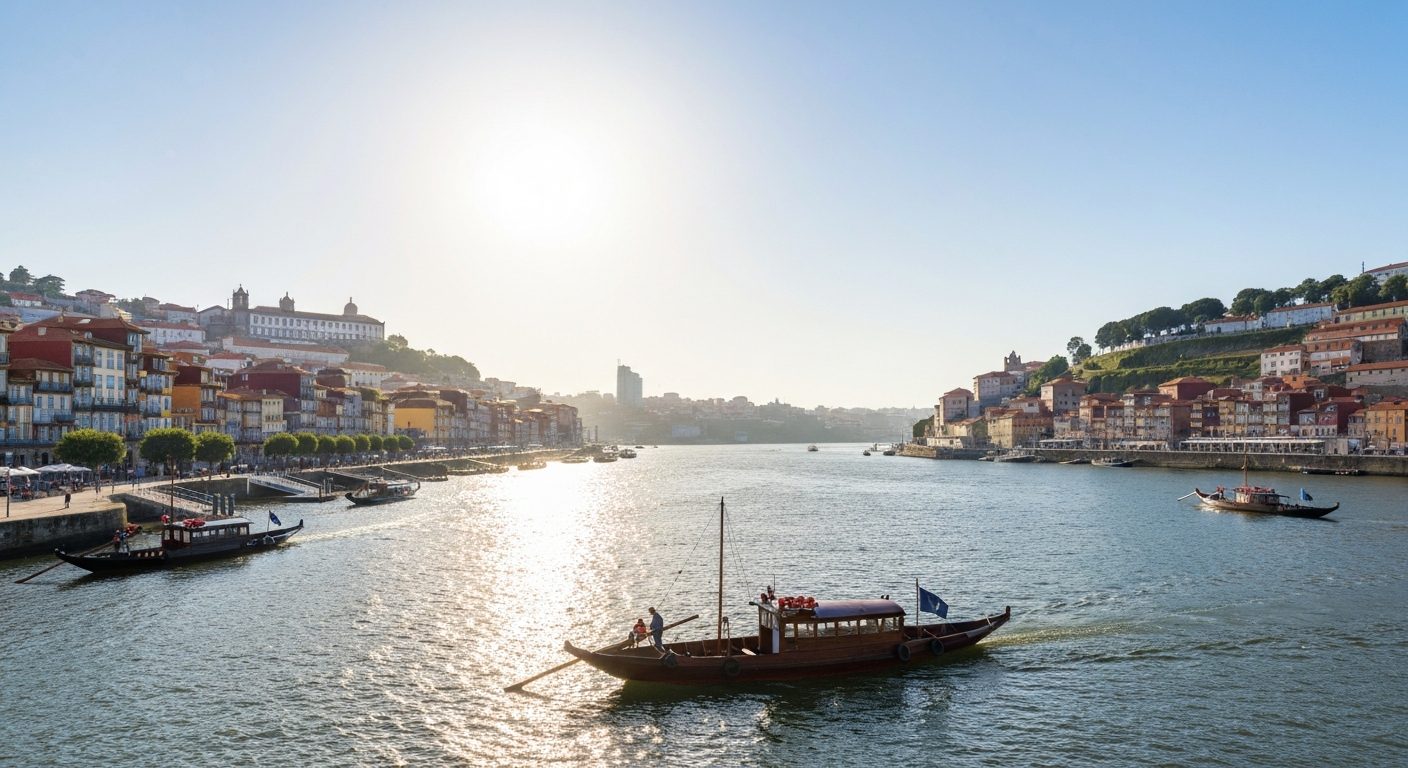
Vila Nova de Gaia (usually shortened to Gaia) is a city on the south bank of the Douro River, sitting directly opposite Porto. It is its own municipality with its own town hall, but the historic riverside strip facing Porto is so close that most visitors treat the two as one destination.
The reason Gaia matters is geography and history. By an old trade rule, port wine could only be aged and stored on the Gaia side of the river, not in Porto itself. So the shippers built their lodges here, the long low warehouses you see lining the bank. The wine came down from the Douro Valley vineyards, matured in these cool cellars, and shipped out to the world from Gaia.
That history is why a wine called “port” is actually aged in Gaia rather than Porto. The lodges are still here, more than 50 of them, and many open their cellars to visitors every day. The riverside in front of them, Cais de Gaia, is now a long pedestrian promenade of restaurants, tasting rooms and boat docks.
Behind the riverside, modern Gaia climbs the hill and spreads south toward the Atlantic. Most of that is residential and not especially touristy. The part you came to see is the first few hundred metres back from the water, plus the hill above it where the views are. You can cover the whole tourist area on foot.
How Far Is Vila Nova de Gaia From Porto, and How to Get There
Want Porto and Gaia both on your doorstep?
Check Villa DatesThe short answer is that Gaia is barely any distance from Porto at all. From the Ribeira waterfront in Porto to the Cais de Gaia waterfront opposite, you are crossing one bridge. On foot across the lower deck of the Dom Luis I bridge it takes about 10 minutes door to door.
You have several ways to cross, and which one you pick depends on where you start and how much you want to walk.
| How to cross | Time | Cost | Best for |
|---|---|---|---|
| Walk, lower deck of Dom Luis I bridge | ~10 min from Ribeira | Free | Almost everyone; flat, river-level |
| Walk, upper deck of Dom Luis I bridge | ~12 min | Free | The best views; pedestrians share it with the metro |
| Metro Line D to Jardim do Morro | 1 stop from Porto | ~1.70 euros + Andante card | Arriving up top for the viewpoint first |
| Taxi or Uber | 5 to 10 min | ~5 to 8 euros | Tired feet, luggage, bad weather |
| Water taxi / small boat | ~5 min | A few euros | A fun one-way crossing on the river |
Yes, you can absolutely walk from Porto to Gaia, and we recommend it. The lower deck of the Dom Luis I bridge connects Ribeira directly to the Cais de Gaia waterfront, flat and at river level. It is the most natural way to arrive among the lodges.
If you want the famous view, take the upper deck instead. It runs alongside the metro track high above the river, and the panorama of Porto’s old town from up there is the best in the city. Both decks are free to walk. From our villa on Rua do Almada in central Porto it is a flat 15 to 20 minute stroll down to the bridge.
The Port Wine Lodges: Which to Visit and What a Tour Costs
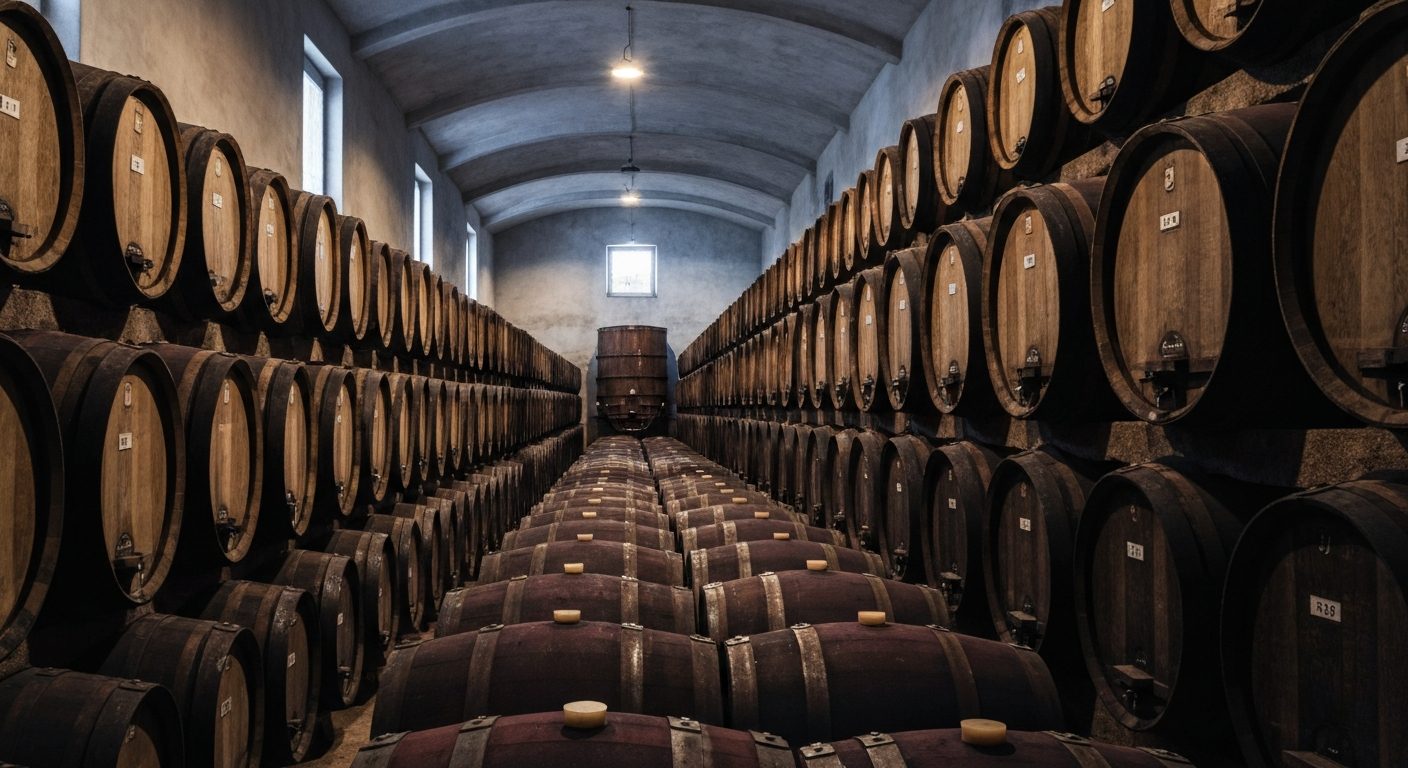
This is the main event. The port lodges are the reason Gaia exists as a visitor destination, and touring one is the single best thing to do here. A standard tour walks you through how port is made, takes you among the giant oak casks where it ages, and finishes with a guided tasting of two or three styles, usually a white, a ruby and a tawny.
A typical cellar tour with a three-glass tasting runs roughly 20 to 27 euros and lasts about an hour. Premium tours with older, rarer wines or a sit-down flight cost more. Many lodges put your entrance fee toward any bottles you buy, so a tour can effectively pay for itself if you take a bottle home.
There are more than 50 houses on this bank, but a handful do the bulk of the visiting. Here is how the main names compare, so you can match a lodge to what you actually want.
| Lodge | Style / what makes it different | Good to know |
|---|---|---|
| Calem | Most visited; slick interactive museum, often a fado show option | Books out fast; take an early morning slot in summer |
| Sandeman | Riverfront, the famous caped “Don” branding; very visitor-friendly | Guides sometimes wear the cape; central and easy to find |
| Graham’s | Uphill from the river; serious, polished, great vintage collection | The walk up is worth it for the views and the cellar |
| Taylor’s | Self-guided audio tour, peacocks in the garden, big terrace | Self-guided means it rarely sells out; good fallback |
| Cockburn’s | Largest cellar; live cooperage with barrel-makers at work | Best for the “how it is actually made” angle |
| Ferreira | 18th-century convent setting; Portuguese-owned heritage story | For history and the tale of Dona Antonia |
| Kopke | Founded 1638, the oldest; sit-down tastings of aged Colheitas | For serious tasters; less of a museum, more of a flight |
| Ramos Pinto | Smaller; beautifully preserved 19th-century office museum | Quieter and more intimate than the big names |
If you only have time for one, our honest pick depends on your mood. For the polished classic experience with a view, Graham’s. For something that almost never sells out, Taylor’s. For the most-visited crowd-pleaser with a museum, Calem. For a real tasting led by wine people, Kopke.
Book in advance. This is the one piece of advice everyone ignores and regrets. At peak times in summer and on weekends, lodges turn walk-ins away, and a few minutes booking online the night before saves you a frustrating afternoon wandering between full cellars. For a curated route through several houses, see our guide to the best port wine cellar tours in Vila Nova de Gaia.
The Gaia Cable Car (Teleferico de Gaia): Is It Worth It?
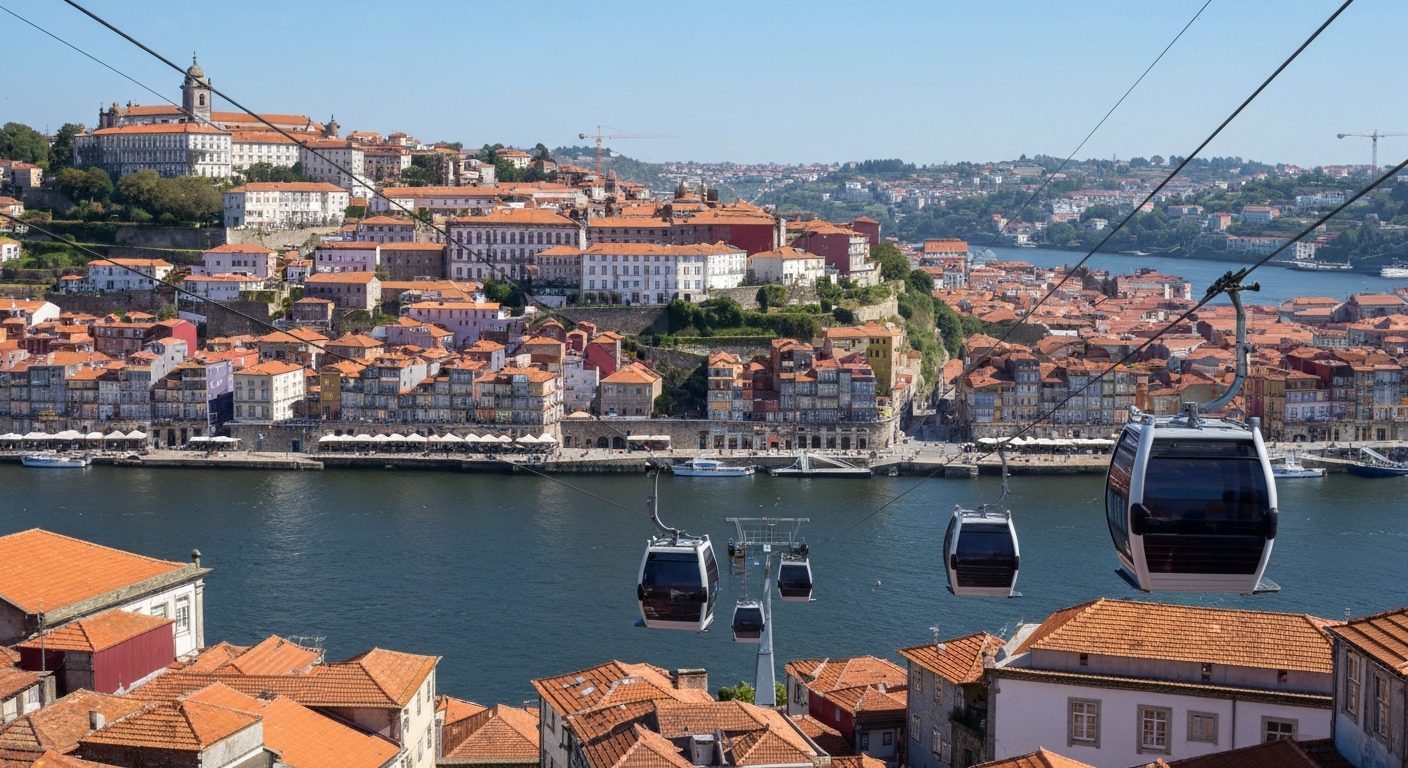
The Teleferico de Gaia is a short cable car that runs between the Cais de Gaia waterfront and Jardim do Morro, the garden viewpoint up by the upper deck of the bridge. The ride takes about 5 minutes in an 8-person cabin and climbs gently over the rooftops of the lodges.
Current fares are 7 euros one way or 10 euros return for adults, with children 5 to 12 at 3.50 euros one way or 5 euros return. A family ticket for two adults and two children is 22.50 euros. Hours shift by season, roughly 10am to 6pm in winter and later into the evening (last boarding around 8pm) in high summer.
Is it worth it? Honestly, it is a nice short ride rather than a thrill, and the views from the cabin are pleasant but not jaw-dropping. The smart play, as in our insider tip above, is to ride it one way only. Go up from the river to Jardim do Morro for 7 euros, enjoy the climb, and then walk back across the bridge instead of paying for the return.
If you have small children, tired legs, or you simply like cable cars, the return ticket is fine and saves you the uphill walk. But the best Porto views are not actually from inside the cabin. They are from Jardim do Morro itself and from the upper deck of the bridge, both of which are free.
Jardim do Morro and the Best Views Over Porto
Jardim do Morro is a small hillside garden at the Gaia end of the bridge’s upper deck, and it serves up the single most loved view in the whole region: Porto’s old town tumbling down to the river, with the bridge in the foreground. It is free, it is open, and at sunset it fills with people sitting on the grass.
You can reach it three ways: ride the cable car up, walk up from the riverside, or simply step off the upper deck of the bridge (or the metro at Jardim do Morro station) straight into the park. For the full picture of the viewpoint, the timing, and where to sit, read our dedicated piece on Jardim do Morro views.
A short walk further along the Gaia ridge is the Monastery of Serra do Pilar, a circular 16th-century monastery with a terrace that gives an even higher, wider panorama. It is a UNESCO-listed building and the viewpoint outside is free to visit; entry inside the monastery is a few euros.
Here are the best free or near-free viewpoints on the Gaia side, in order of how easy they are to reach:
- Upper deck of the Dom Luis I bridge. Walk it slowly, mid-span, for the classic shot of Ribeira.
- Jardim do Morro. The sunset favourite, free, with the cable car arriving right there.
- Monastery of Serra do Pilar terrace. The highest, widest view; a 5-minute walk from Jardim do Morro.
- The lodge terraces. Graham’s, Taylor’s and the rooftop bars on the riverside all face Porto.
Cais de Gaia: The Riverside, Boats and WOW
The Cais de Gaia is the pedestrian waterfront promenade running along the foot of the lodges. It is lined with restaurants, tasting rooms and the docks where the river boats tie up. This is where you stroll between cellar visits, grab lunch facing Porto, or catch a cruise.
The wooden rabelo boats moored here once carried port barrels down from the Douro Valley. Today they are mostly decorative or used for short sightseeing trips. If you want to get out on the water, the six-bridges cruise leaves from these docks and from Ribeira opposite; see our guide to Douro river cruises for what to book.
Up the hill behind the riverside is WOW (World of Wine), a large complex of converted cellars holding several museums under one roof. There is a wine experience, a cork museum, a chocolate museum, a fashion and fabric museum, and a pink palace dedicated to rose. It has bars, restaurants and big terrace views, and it works well as a rainy-day option or a half day in itself.
For eating, the Cais de Gaia restaurants are convenient and the view is unbeatable, though prices reflect that. For better value and the same fresh fish, walk one or two streets back from the water. A glass of chilled white port with tonic on a terrace facing Porto is, frankly, the whole point of being here.
Beaches South of Gaia
Most people never realise Gaia has a coastline, but it does, and the beaches are usually quieter than the ones on the Porto side. They sit a short drive or train ride south of the city centre, where the Douro meets the Atlantic and the coast runs down toward Espinho.
The standout is Praia de Miramar, home to the tiny Capela do Senhor da Pedra, a stone chapel built on a rock right at the waterline. It is one of the most photographed spots on this coast and an easy half-day trip on the suburban train.
A few beaches worth the trip if you want sand and sea air:
- Praia de Miramar. The chapel-on-a-rock; reachable by suburban train in around 25 to 30 minutes.
- Praia da Aguda. A working fishing beach with seafood restaurants right by the boats.
- Praia de Lavadores and Praia de Canide. Closer to the city, broad sands, good for a quick swim.
- Praia de Madalena. Long, popular family beach with calmer water and amenities.
The water is Atlantic, so it is bracing rather than warm even in summer. These beaches are a lovely contrast to the wine and the views, but they are an extra excursion, not part of the riverside afternoon. If your trip is short, skip them and save them for a return visit.
How Long to Spend in Vila Nova de Gaia
For most visitors, half a day is the right amount of time for the riverside Gaia experience. That is enough to walk across the bridge, tour one port lodge, ride or walk up for the views, have lunch on the Cais de Gaia, and stroll back. Call it 3 to 5 hours.
If you are a wine enthusiast and want two lodge tours, or you want to add WOW or a river cruise, give it a full day. Two tours plus lunch plus the museums comfortably fills the time from late morning to early evening, and you can end it with sunset at Jardim do Morro.
The beauty of staying in central Porto is that Gaia is not a day trip you have to plan around. It is across the bridge. You can wander over for a tasting one afternoon, come back for dinner in Porto, and return another evening just for the sunset view. That flexibility is exactly why basing yourself in the old town works so well, and why our guests at the Ribeira across the river drift over to Gaia again and again.
One honest trade-off: the riverside is busy and touristy, especially midday in summer. Go early or late, walk a street or two back from the water for food, and you sidestep most of the crowds. Gaia rewards a slower, off-peak visit.
Base Yourself a Short Walk From the Bridge
Villa Almada is a luxury family villa with a private pool on Rua do Almada in central Porto, sleeping 7 plus 2 infants, a flat stroll from the Dom Luis I bridge and Gaia’s lodges. Book direct with no booking fees.
Check Dates & Book Direct