
At A Glance
The best area to stay in Porto for a first visit is the Baixa and Almada district, which is central, flat and walkable, while Ribeira is prettier but steeper and busier.
- Porto’s historic core is small: most central districts are within a 20 minute walk of each other
- Ribeira has the views and the crowds; Cedofeita and Bolhão are quieter and cheaper
- Foz do Douro is the beach option, roughly 6 km west of the centre
- Villa Almada sits on Rua do Almada in Baixa, 3 to 5 minutes from Trindade metro on level ground
- Almost nowhere in central Porto needs a car; the metro reaches the airport in about 30 minutes
Choosing where to stay in Porto is easier than most guides make it sound, because the city is genuinely small. You can cross the historic centre on foot in half an hour. What changes between districts is not distance so much as gradient, noise and price, and those three things matter more here than in a flatter city. If you are travelling with a pushchair, a bad address in Porto means a hill every single time you leave the door, which is why we ended up writing a separate guide to staying in Porto as a family.
The other thing worth knowing early is that the postcard view and the practical base are rarely the same place. Ribeira, the tiered riverfront everyone photographs, is beautiful and steep and loud until quite late. Ten minutes uphill, the streets flatten out and the prices drop. Our own villa sits in that second category, on Rua do Almada, which is why we know the difference so well; if you want the specifics, the full villa rental guide covers what that location actually gives you.
Below is an honest account of the seven areas worth considering, what each one costs you in convenience, and who each suits. There is also a short section on the two or three places we would not book, which most guides leave out.
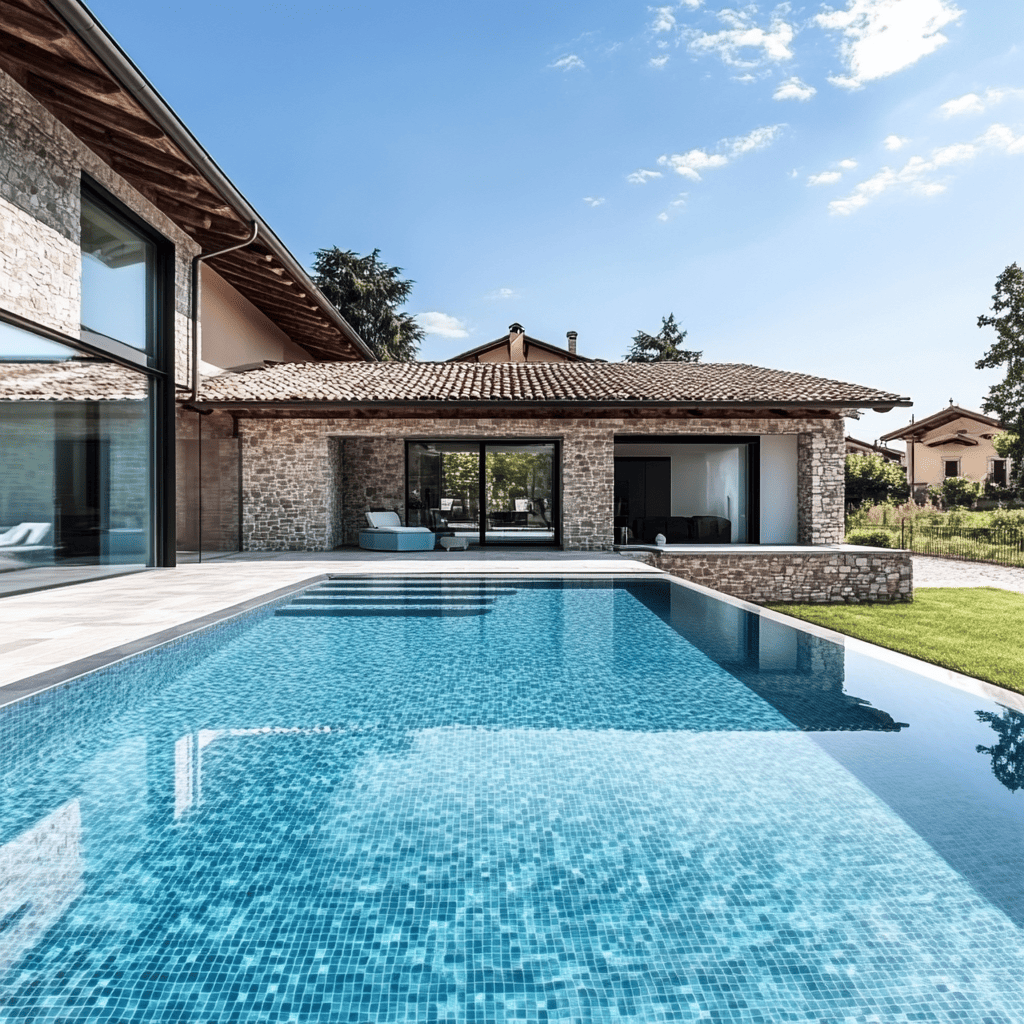
Staying in the middle of it? Villa Almada is a private villa with its own pool and garden on Rua do Almada, in the flat part of central Porto. Sleeps 6 plus 2 infants, daily breakfast included. From €269 a night.
See the Villa & PoolPorto’s Districts Compared
Before the detail, the short version. Prices below are relative rather than absolute, because what you pay in Porto swings hard between February and August, and our guide to Porto weather month by month is the quickest way to work out which end of that you are booking into.
| District | Best for | Terrain | Price |
|---|---|---|---|
| Baixa & Almada | First visits, families, anyone walking a lot | Mostly flat | Mid to high |
| Ribeira | Short romantic breaks, the river view | Very steep | High |
| Cedofeita | Longer stays, independent shops, value | Gentle | Mid |
| Bolhão & Santa Catarina | Shopping, market mornings, eating well cheaply | Mostly flat | Mid |
| Foz do Douro | Beach days, quiet, second visits | Flat, but 6 km out | High |
| Boavista | Business trips, concerts, driving | Flat | Mid |
| Vila Nova de Gaia | Port lodges, the view back at Porto | Steep | Mid |
The Seven Areas, In Order Of How Often We Recommend Them
1. Baixa and Almada
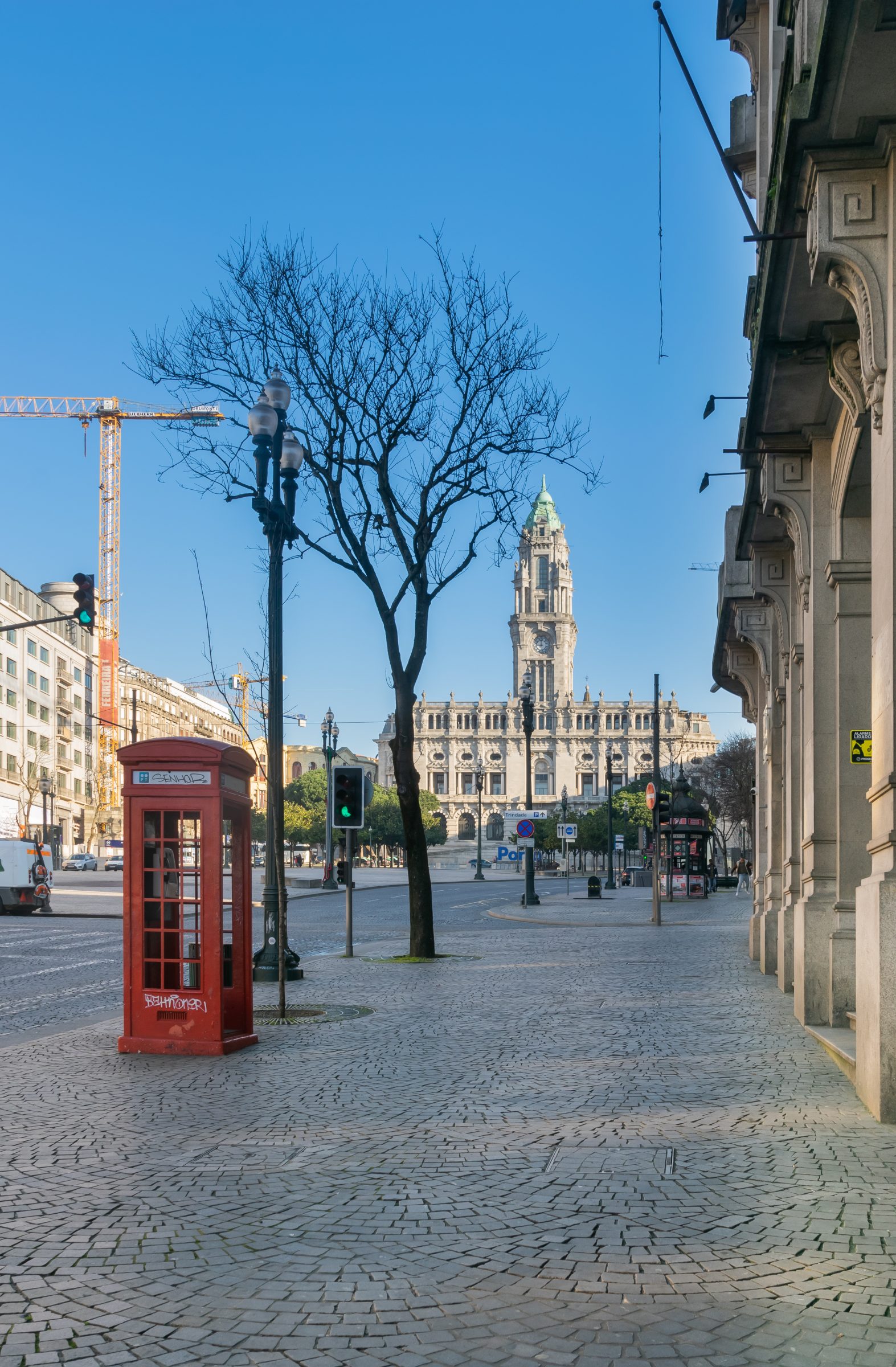
Baixa is the commercial heart of the city, running from Avenida dos Aliados down through the streets around São Bento station. Rua do Almada, where our villa is, sits at its western edge. It is where most of Porto’s daily life happens: banks, department stores, coffee counters where people stand rather than sit, and a good deal of nineteenth century architecture that nobody photographs because Ribeira is more colourful.
The practical case for Baixa is simple. It is central without being on the tourist strip, so restaurant prices are noticeably better than fifteen minutes downhill, and it is the flattest part of old Porto. Trindade metro sits at the top of it, which puts the airport about thirty minutes away on Line E and Matosinhos beach about twenty-five; the Andante travel card covers both and is worth buying on arrival. If this is your first visit and you intend to walk everywhere, this is the sensible answer. The one caveat: the streets nearest Aliados can be noisy on Friday and Saturday nights, so ask which way your room faces.
2. Ribeira
Ribeira is the row of narrow, mismatched, brightly painted houses stacked above the Douro, and it is a UNESCO World Heritage site for good reason. Sitting on the quay at seven in the evening with the Dom Luís I Bridge above you and the rabelo boats moored in front is one of the genuinely great European experiences, and no amount of practical argument makes that untrue.
What the photographs do not convey is the gradient. Ribeira is at the bottom of a gorge, and everything else in Porto is above it. Every trip back from dinner is a climb, the lanes are cobbled and uneven, and in July the quayside is solid with people until late. Rooms are small, old and expensive, because the buildings are protected and cannot be extended. Our honest recommendation: it is a wonderful place to spend evenings and a difficult place to sleep for a week. Two or three nights as a couple, yes. A family of five for a fortnight, no. There is more on the district itself in our Ribeira guide.
Who Each District Actually Suits
- Couples on a long weekend: Ribeira for the evenings, or Baixa if you would rather not climb
- Families with young children: Baixa or Cedofeita, both flat enough for a pushchair
- Groups of friends: Bolhão and Santa Catarina, for the eating and the metro
- Second or third visits: Foz do Douro, where the beach replaces the sightseeing
- Anyone with a hire car: Boavista, which is the only district with sane parking
- Port wine as the main event: Vila Nova de Gaia, cellars on the doorstep
3. Cedofeita

Cedofeita runs north-west from the centre and is where a lot of Porto’s independent retail ended up: record shops, small galleries around Rua Miguel Bombarda, bookshops, and a pedestrianised stretch of Rua de Cedofeita that is pleasant to wander without any particular aim. It is residential enough that you will hear neighbours rather than stag parties.
For a stay of a week or more, this is the area we would push people towards after Baixa. Rents and room rates are lower, the ground is gentler than the riverside, and the walk into the centre is ten to fifteen minutes. The Palácio de Cristal gardens are on the southern edge, which is a pleasant thing to have on your doorstep; the full guide to Porto’s parks covers what is there. The trade-off is that you will not stumble across a great restaurant every fifty metres the way you do closer in.
4. Bolhão and Santa Catarina
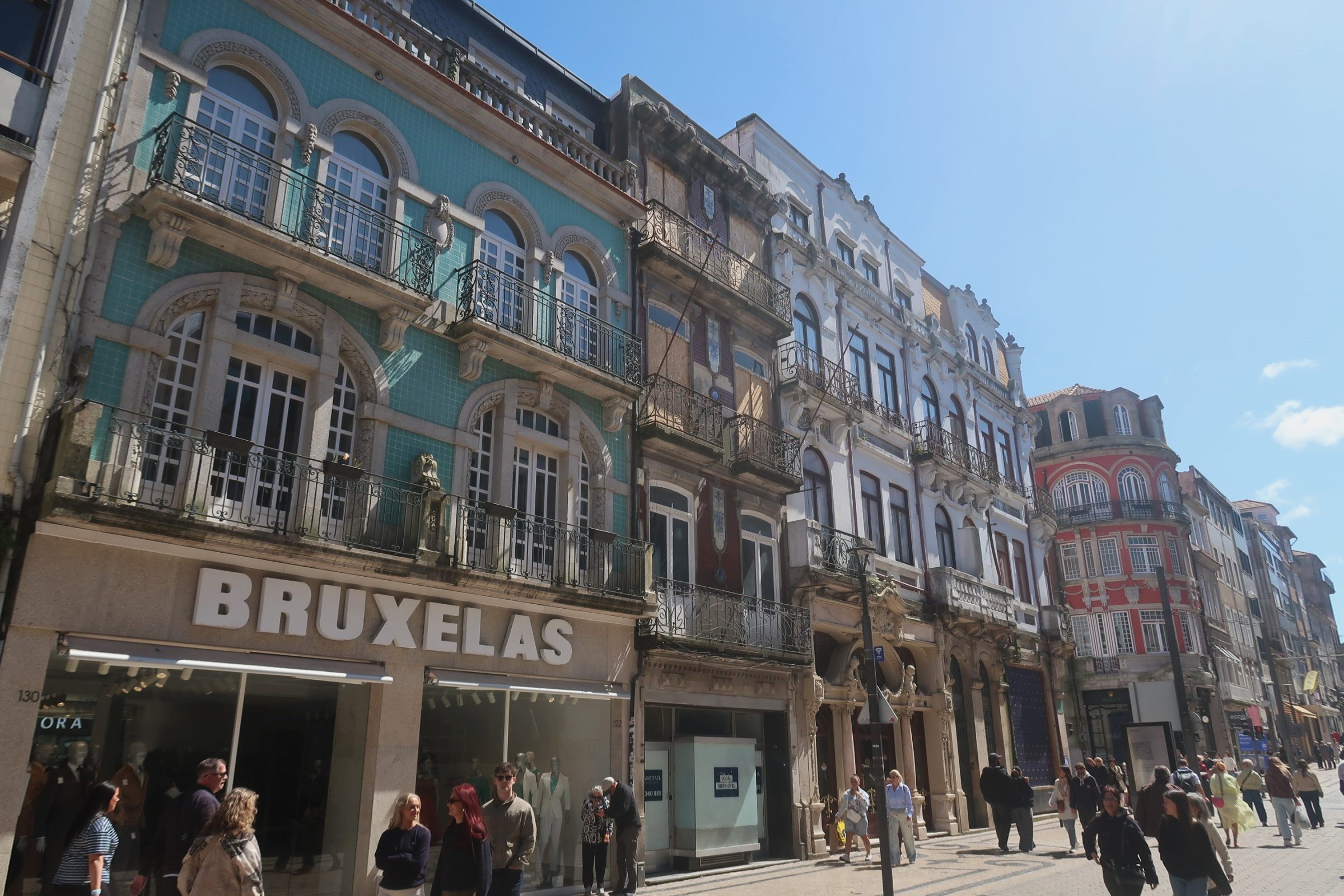
Just east of Baixa, this is the shopping quarter: Rua de Santa Catarina running north for the best part of a kilometre, the Café Majestic halfway along it, and the restored Mercado do Bolhão at its centre. The market reopened after a long renovation and remains the best place in the city to buy fruit, fish, bread and cheese, which matters more than you would expect if you are self-catering.
The area is flat, well served by metro at Bolhão station, and priced below the riverfront. Its weakness is daytime crowding along Santa Catarina itself, which is one of the busiest pedestrian streets in Portugal and not somewhere you want to push a pram at four in the afternoon. One street either side and it calms down immediately, so the specific address matters here more than the district. If you are booking around children, our guide to where to stay in Porto with kids goes street by street.
Questions Worth Asking Before You Book
- How many steps are there from the street to the front door, and how many inside?
- Which way does the bedroom face, and is it above a bar?
- Is there a lift, and does it reach the floor you are on?
- How far is the nearest metro station on foot, uphill or down?
- Is breakfast included, and is there anywhere open nearby if it is not?
5. Foz do Douro
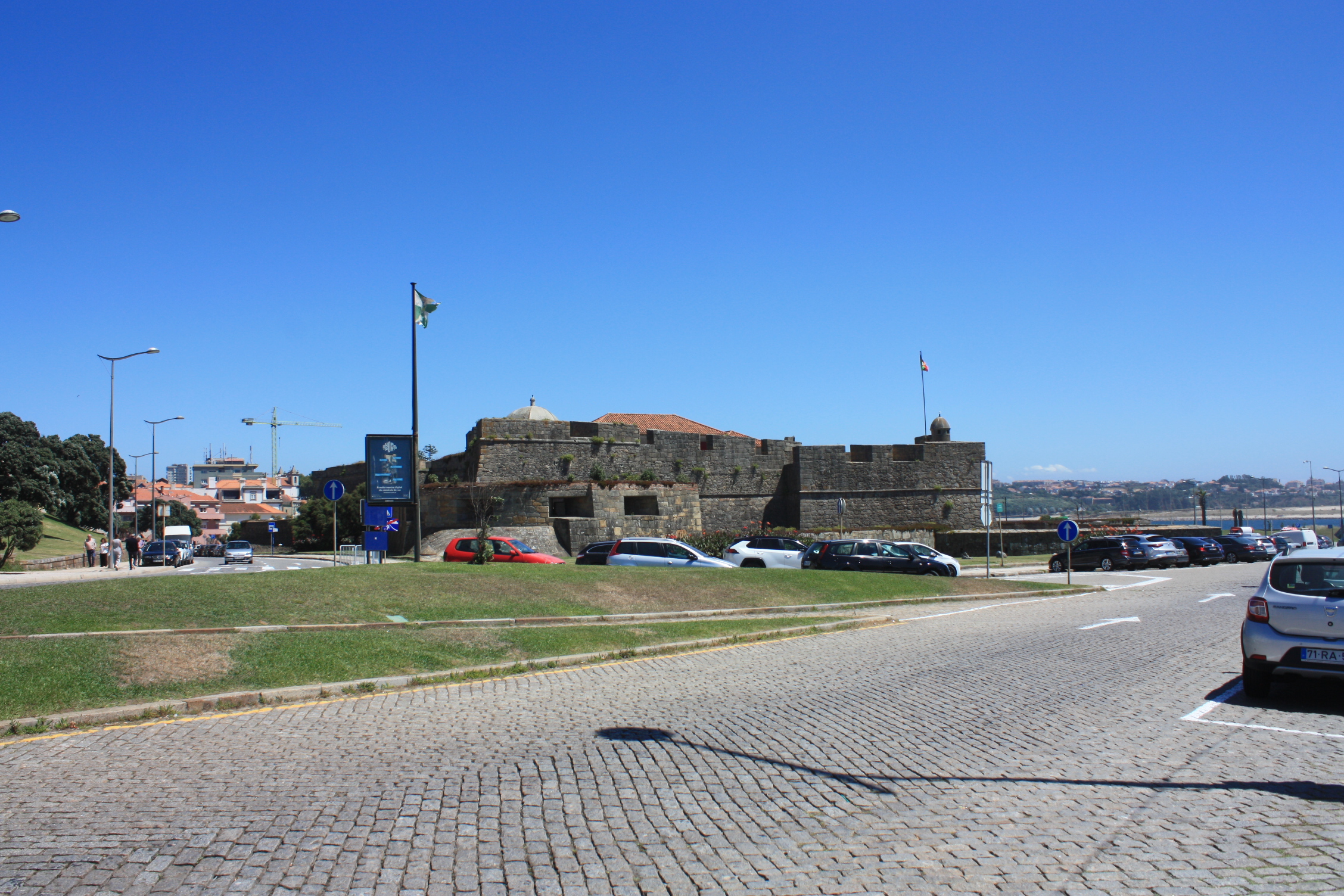
Foz is where the Douro meets the Atlantic, about six kilometres west of the centre, and it is the wealthy end of Porto. Wide seafront promenade, a nineteenth century fort, tea rooms, joggers, and a string of small beaches that fill up from June. The character is closer to a coastal town than a city district, and it is noticeably cooler in August than the centre.
It suits second and third visits, or anyone whose priority is a beach holiday with a city attached rather than the reverse. Be clear-eyed about the commute: tram 1 along the river is lovely and slow, the bus is quicker, and a taxi is fifteen to twenty minutes. Doing that twice a day for a week gets old, particularly with children. If beaches are the draw, our round-up of the best beaches near Porto covers the alternatives you can reach from a central base.
6. Boavista

Boavista is modern Porto: a long avenue running west from the Rosália roundabout, lined with offices, larger hotels and apartment blocks, with the Casa da Música concert hall as its landmark. It is flat, well connected, and has the sort of parking that the old city simply cannot offer.
As a holiday base it is the least atmospheric option on this list, and we would not send a couple here for a long weekend. As a practical base it earns its place: if you are here for a conference, a concert at Casa da Música, or you have hired a car and want to leave it somewhere sensible, Boavista solves problems the historic centre creates. It also sits on the metro, so getting into town takes about ten minutes, and there is plenty within reach on our list of the best things to do in Porto.
7. Vila Nova de Gaia
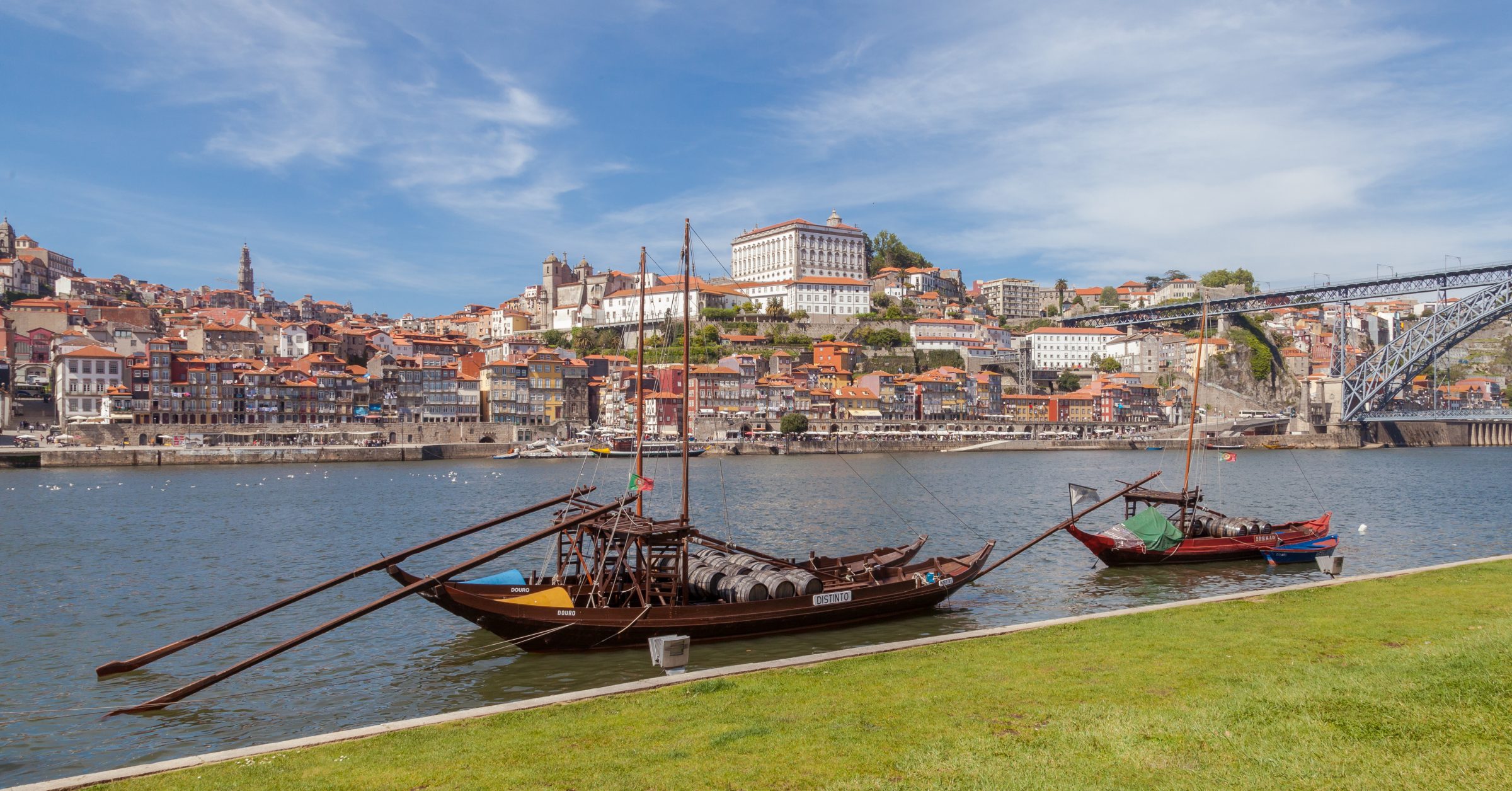
Strictly a separate city across the river, Gaia is where every port house has its cellars: Sandeman, Taylor’s, Gra’ham’s and the rest, stacked up the slope behind the waterfront. Staying here buys you the best view in the region, because you are looking at Porto rather than standing in it, and tastings are a two minute walk from your door.
The catch is the bridge. Everything in Porto proper involves crossing the Dom Luís I, either on the upper deck with the metro or the lower with the traffic, and the climb back up on the Gaia side is steep. It works well for a wine-focused trip or a couple of nights at the end of a longer stay. It works less well as a general base, and less well again if anyone in the party is unsteady on their feet. The Gaia guide has the detail on the cellars themselves.
Your Porto Base in the Old Town
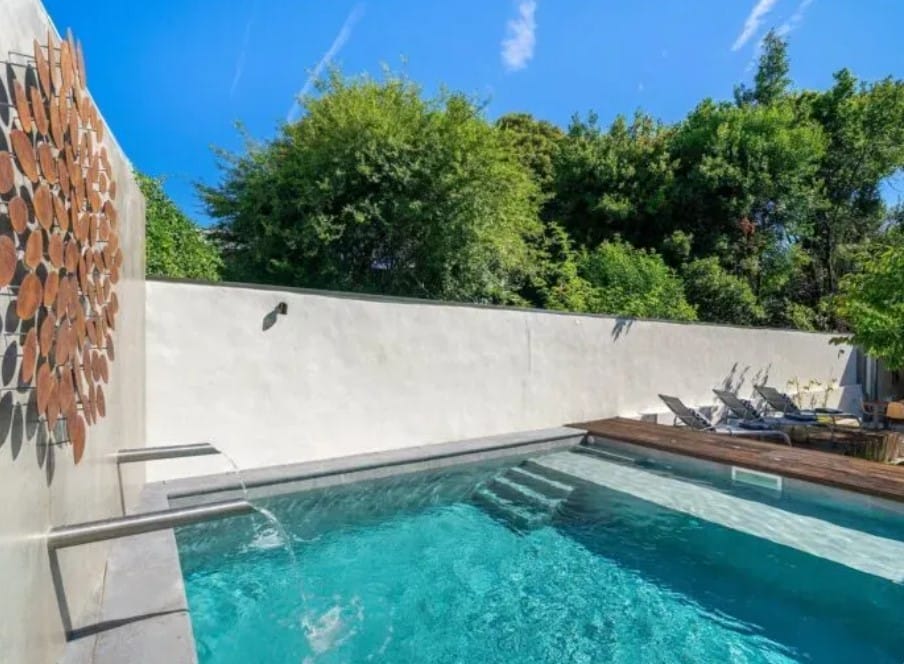
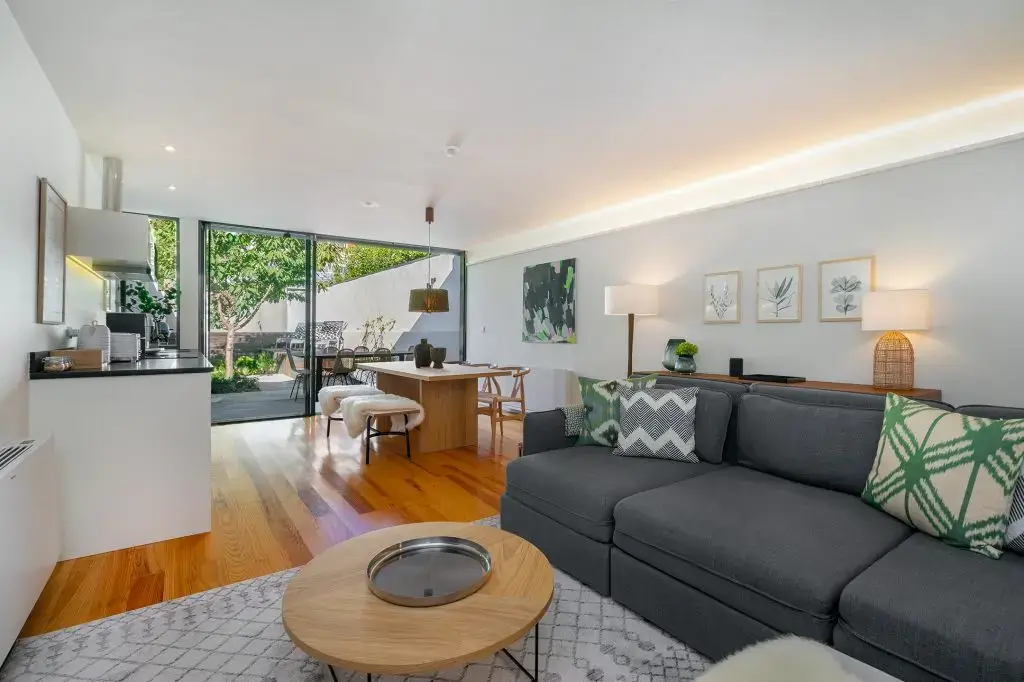
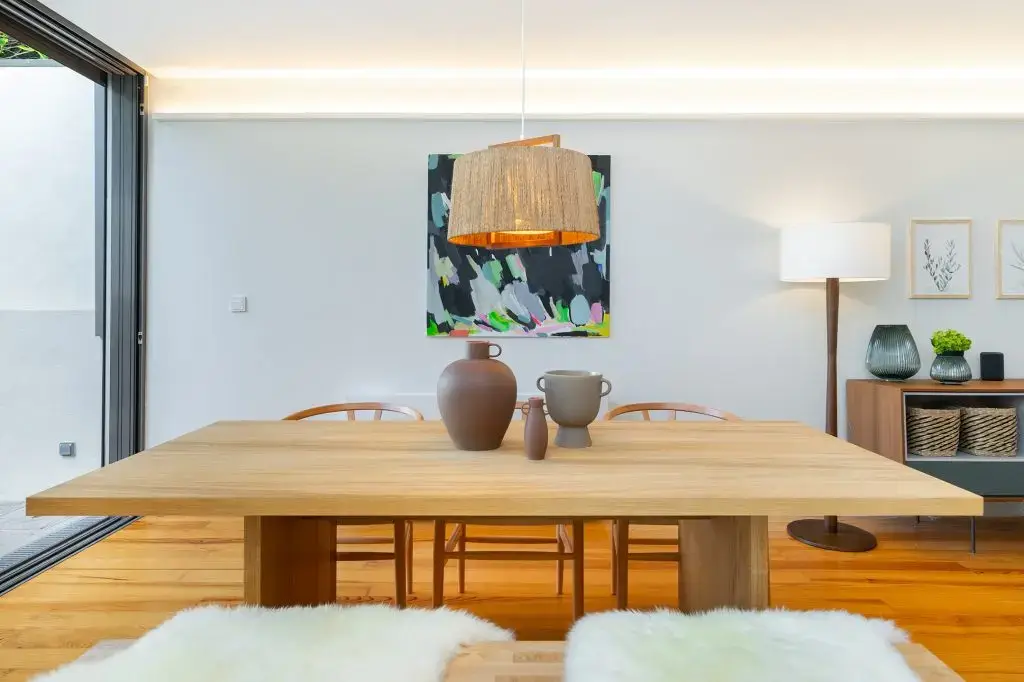
Villa Almada, a private villa with pool and garden on Rua do Almada.

Where We Would Not Book
Porto is a safe city by European standards and there is no district a visitor needs to avoid on those grounds. The areas we steer people away from are the ones that disappoint rather than the ones that worry us.
Three Listings To Walk Away From
- Anything marketed as “Porto” that is actually in Matosinhos, Gondomar or Maia. These are separate municipalities and can be forty minutes out. Check the address on a map, not the listing headline.
- The immediate strip along Cais da Ribeira in July and August, where noise runs late and rooms are small for the money.
- Any listing advertising a view without saying how many stairs reach it. A fourth-floor walk-up in a protected building is common here and rarely mentioned.
One more practical point. Porto’s historic buildings are old, and sound insulation between apartments is often poor. If you are a light sleeper, a converted townhouse on a bar street is a worse bet than a slightly duller address two streets back.
How Long To Stay, And Where That Changes Things
For two or three nights, stay as close to the centre as your budget allows and accept the noise, because your time is worth more than the saving. Baixa or Ribeira both work at that length.
For four to seven nights, which is what most people do, the calculation changes. You will want a kitchen, somewhere to put laundry, and a street you can return to at three in the afternoon without a climb. Baixa, Cedofeita and Bolhão all suit that, and this is the length of stay our own guests book most often. Anything beyond a week and the case for a residential district with a supermarket and a proper local café becomes overwhelming.
Whichever you choose, you almost certainly do not need a car. Central parking is scarce and expensive, the metro is straightforward, and the airport is about thirty minutes away. We have written up every option in the guide to getting from Porto Airport into the city.

A Note From Susan
“The question I get asked most is whether it is worth paying more to be right on the river. My answer is usually no, and I say that as someone who loves Ribeira. Guests who book down there tell me the view was wonderful and the stairs were not. Ten minutes up the hill you get a flat street, a quieter night and change left over for dinner.”
Susan, host at Villa Almada
“Awesome lodging in the heart of Porto. The service is 6 stars if possible. While all the staff were outstanding, Susan and Hannah were incredibly kind and helpful during our stay. I would not stay anywhere else when returning to Porto.”
— DM B (Dave), Local Guide · ★★★★★ 5/5 on Google
Frequently Asked Questions
What Is The Best Area To Stay In Porto?
For a first visit, Baixa and the Almada area are the best all-round choice. The district is central, unusually flat for Porto, and Trindade metro puts the airport around 30 minutes away. Ribeira is more beautiful but steeper, louder and roughly 20 to 30 per cent dearer for an equivalent room.
What Is The Best District To Stay In Porto For First-Timers?
Baixa, for the same reasons. Everything in the historic centre is within a 20 minute walk, restaurant prices are better than on the riverfront, and you avoid the constant climbing that catches people out in Ribeira and Gaia. Book a street away from Avenida dos Aliados if you are a light sleeper.
Where Should You Avoid Staying In Porto?
No central district is unsafe. The genuine traps are listings marketed as Porto that sit in Matosinhos, Gondomar or Maia, which can be 40 minutes out, and rooms on the Cais da Ribeira strip in July and August, where noise runs late. Always check the address on a map rather than trusting the listing title.
Is Ribeira A Good Place To Stay In Porto?
For two or three nights as a couple, yes. It has the Douro views, the UNESCO waterfront and the best evening atmosphere in the city. For a week, or with children or heavy luggage, it is hard work: the district sits at the bottom of a gorge, so every return trip is a climb up cobbled lanes.
Is It Better To Stay In Porto Or Vila Nova De Gaia?
Stay in Porto unless port wine is the main reason for the trip. Gaia gives you the best view back across the river and cellars on your doorstep, but everything else means crossing the Dom Luís I Bridge and climbing a steep slope on the return. It suits two nights at the end of a longer stay.
Is Foz Do Douro Worth Staying In?
Foz suits second visits and beach-led trips. It is about 6 km west of the centre, noticeably quieter and cooler in August, with a seafront promenade and small beaches. The commute is 15 to 20 minutes by taxi or longer on tram 1, which becomes tiring if you are going into the city twice a day.
How Many Days Do You Need In Porto?
Four to five days covers the city comfortably, including a day for the port lodges in Gaia and a half day at the beach. Two or three nights is enough for the historic centre alone. Anything past a week and you will want a residential district with a supermarket rather than a room on the tourist strip.
Do You Need A Car In Porto?
No. Central parking is scarce and costly, the historic streets are narrow and often one-way, and the metro covers the airport, the beaches and Gaia. A car only makes sense if you are staying in Boavista or heading out to the Douro Valley for a few days.
Which Porto Neighbourhood Is Best For Families?
Baixa and Cedofeita, because both are flat enough to manage with a pushchair and close to supermarkets. Villa Almada sits on Rua do Almada in Baixa, three to five minutes from Trindade metro on level ground, and keeps cots and high chairs for guests travelling with young children.
Stay In The Flat Part Of Central Porto
Villa Almada is a private villa with its own pool and walled garden on Rua do Almada, three to five minutes from Trindade metro. Sleeps 6 plus 2 infants, with daily breakfast and daily cleaning included. From €269 a night.
Check AvailabilityPhotography by Michael Gaylard, Krzysztof Golik, -wuppertaler, Vlach Pavel, Reis Quarteu, Dale Cruse and Diego Delso, used under Creative Commons licences.